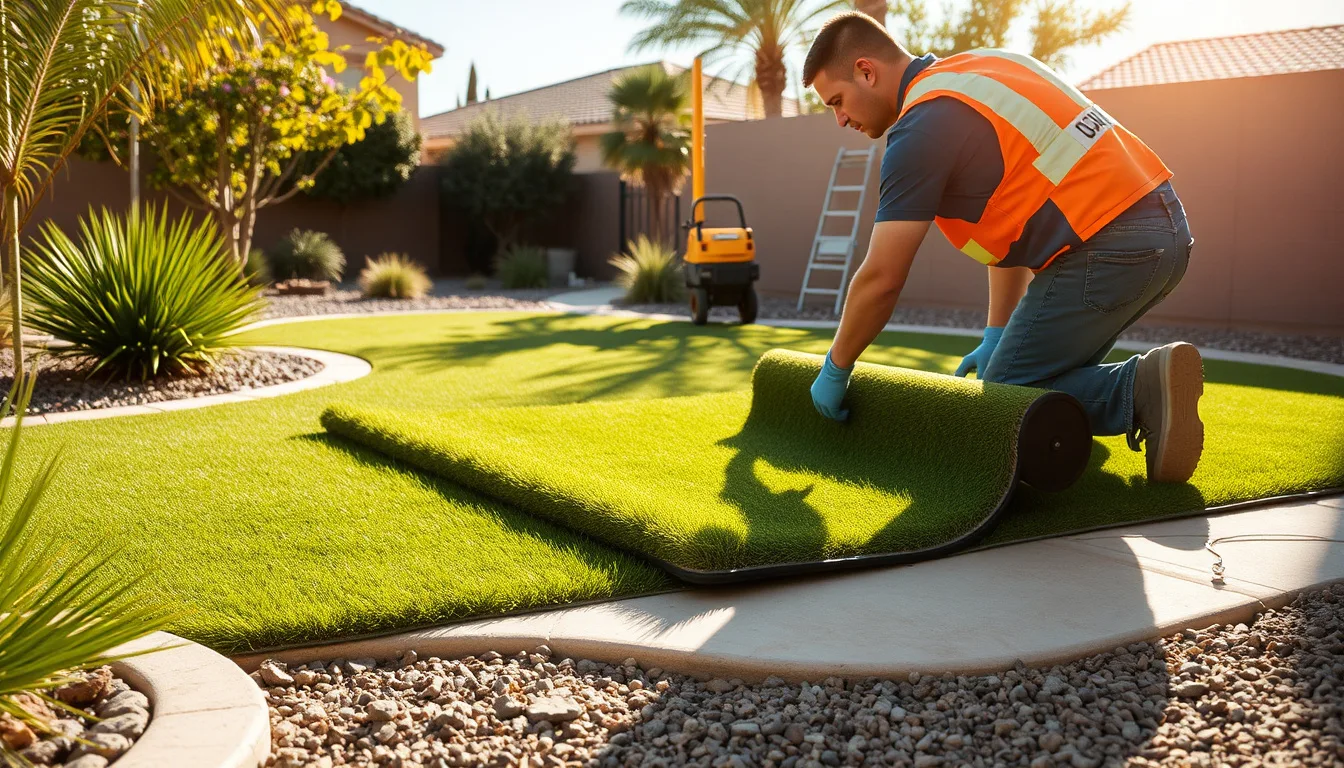
Artificial Turf Installation — Maricopa, AZ
Artificial Turf Installation in Maricopa, AZ — Real-Grass Looks Without the Desert Water Bill
Green year-round, no mowing, no overseeding, and a fraction of the water a natural lawn needs in the low desert — installed the right way, with the base prep that determines whether it lasts.
Why Artificial Turf Makes Outsized Sense in the Low Desert
Natural grass in Maricopa fights the climate every day of its life — extreme summer heat stress, the need to overseed for winter color, and a water bill that never really lets up. Artificial turf sidesteps all three: it stays green year-round without overseeding, tolerates the heat that browns out natural lawns every summer, and needs essentially no irrigation once it's installed.
That combination is why artificial turf has moved well past the golf-course-green synthetic grass of a decade ago into a mainstream option for Maricopa-area yards — front yards that need to stay HOA-presentable with zero watering, backyards for kids and pets that stay usable through summer, and putting greens for homeowners who want a permanent, always-manicured feature.
Real Water Savings, By the Numbers
Irrigated natural turfgrass in Central Arizona typically requires somewhere in the range of 55 to 75 gallons of water per square foot per year. Synthetic turf needs close to none — occasional rinsing for cleaning, roughly 500 to 2,000 gallons a year total for a typical yard, rather than tens of thousands of gallons for irrigation.
For a 1,000-square-foot natural lawn converted to artificial turf, that works out to roughly 55,000 gallons of water saved per year — a figure commonly compared to more than 1,800 showers. Water savings of 70% or more are widely reported for artificial-turf conversions in this region; in Chandler specifically, where the average homeowner has 2,000-plus square feet of natural grass, that implies roughly 110,000 gallons a year in potential savings from a full conversion.
These are commonly reported industry figures rather than a single controlled study, so we present them as realistic ranges rather than a guaranteed number for your specific property — but paired with the more institutionally sourced AMWUA and Arizona Department of Water Resources irrigation figures, the direction and scale of the savings are well supported.
- Natural turf: ~55–75 gallons of water per sq ft per year
- Synthetic turf: near-zero irrigation, ~500–2,000 gal/year for cleaning only
- 1,000 sq ft lawn conversion: ~55,000 gallons saved per year
What Actually Goes Into a Proper Install
The difference between artificial turf that looks great for fifteen years and turf that looks bad within two comes down almost entirely to what happens before the turf itself ever gets rolled out. A proper install starts with excavating the area to the right depth, compacting a crushed-granite or similar base, and laying a weed barrier — this base is what keeps the finished surface flat, prevents low spots and wrinkles, and lets water drain through instead of pooling.
A drainage layer is built into the base wherever needed so monsoon-intensity rainfall moves through the turf rather than sitting on top of it. Only after the base is compacted and graded does the turf itself get laid, seamed, and secured, with infill brushed in to hold the blades upright and add cushioning.
Skipping or shortcutting the base is the single most common cause of turf that shifts, develops low spots, or drains poorly within a year or two — it's also the step that's hardest to see in a finished photo, which is exactly why it's the step worth asking about before hiring anyone.
Why a Professional Install Avoids the Common Failure Points
Most complaints about artificial turf — that it looks fake, that it drains poorly, that it doesn't hold up — trace back to a poor original installation or very low-quality product, not to artificial turf as a category. Without a compacted gravel base, turf can shift, wrinkle, or pool water during a monsoon storm; without the right infill for the climate, it can hold heat unnecessarily or compact down over time.
The bare keyword search results for artificial turf are dominated by big-box DIY content, which reflects how common the DIY route is — and also why so many of the visible complaints about artificial turf online trace back to shortcuts a big-box DIY kit doesn't account for. A professional install handles the base prep, drainage, and infill selection that determine whether the turf still looks good in year ten, not just year one.
HOA Policies on Artificial Turf
Most HOAs in the Maricopa area now allow artificial turf, though nearly every community has its own specific requirements — turf quality or type, placement (often backyard-only, or with front-yard restrictions), and drainage standards are the most common points a CC&R will address. Many HOAs that require irrigation even for xeriscaped yards treat artificial turf areas differently, since there's no living plant material to water.
We design installs to meet common HOA standards in this area and recommend confirming your specific community's current rules before we start — requirements do vary meaningfully from one Maricopa subdivision to the next.
Pet- and Kid-Safe Infill Options
Infill selection matters more for households with pets or kids than most homeowners expect. We offer infill options selected for drainage and odor control in pet areas, along with cooler-running infill choices for surfaces that will see a lot of bare feet in full summer sun. The right infill for a putting green is different from the right infill for a play lawn, and we walk through those tradeoffs as part of every quote rather than defaulting to one product for every yard.
Putting Greens and Backyard Add-Ons
A backyard putting green is one of the more popular artificial-turf add-ons we install — a permanent, always-manicured feature that needs none of the water or mowing a real practice green would require in this climate. Putting greens are typically installed as part of a broader backyard turf project, with a contoured base and specialized turf pile designed for a true, consistent roll rather than standard lawn-grade turf.
Cost by Square Foot
Artificial turf installation pricing depends on square footage, how much base prep the site needs, and the turf grade selected. A proper install price includes base excavation, drainage layer, and infill — which is exactly why DIY kit pricing and professional installed pricing look so different on paper. We quote after an on-site visit so the number reflects your actual yard, not a generic per-square-foot estimate.
Get Your Artificial Turf Estimate
Every turf project starts with a free on-site visit so we can assess drainage, sun exposure, and how the space will actually be used before quoting. Call 844-967-5247 or email josh@contractorschoiceagency.com.
We install artificial turf across Maricopa, AZ and nearby communities including Casa Grande, Chandler, Sun Lakes, and the Ak-Chin/Stanfield area.
Artificial Turf Installation FAQs
Questions before you book
A proper install includes an excavated and compacted base (typically crushed granite or similar), a weed barrier, and often a drainage layer before the turf and infill go down — skipping this base prep is the most common cause of turf that looks bad or drains poorly within a year or two.
Without a compacted gravel base, turf can shift, develop low spots or wrinkles, and drain poorly during monsoon storms — this is the single biggest difference between a professional install and a DIY or corner-cutting job.
The most common complaints trace back to poor original installation (inadequate base, wrong infill for the climate) or very low-quality product, not artificial turf itself — surface heat in direct summer sun is also a real consideration in the low desert, which is why product/infill selection matters for shaded vs. full-sun areas.
Irrigated natural turfgrass in Central Arizona typically needs somewhere in the range of 55–75 gallons of water per square foot per year, while artificial turf needs close to none beyond occasional rinsing — for an average-size lawn that can mean tens of thousands of gallons saved annually.
Artificial turf installation pricing depends on square footage, base prep needs, and turf grade selected — a proper install includes base excavation, drainage layer, and infill, which is why DIY and professional pricing differ significantly.
Ready for a yard that works with the desert, not against it?
Free on-site estimates for Maricopa and the surrounding West Valley — design, installation, and maintenance built for real Arizona water bills.