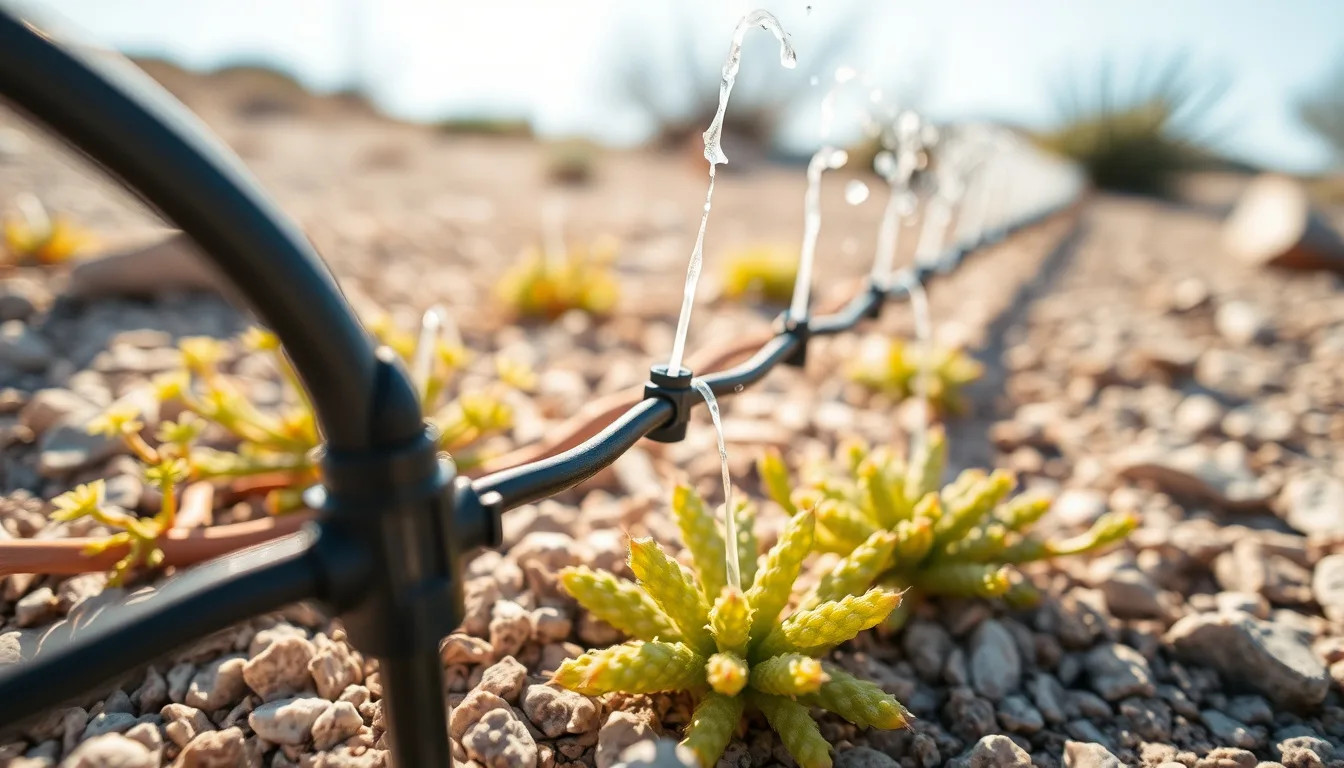
Irrigation & Sprinkler Repair — Maricopa, AZ
Irrigation & Sprinkler Repair in Maricopa, AZ — Fast Fixes for Desert Drip Systems and Sprinklers
Desert irrigation systems fail differently than systems in milder climates — sun-brittle tubing, mineral-clogged emitters, and heat-cycled valves need a technician who knows what to look for.
Common Desert-Specific Irrigation Failure Points
Irrigation systems in Maricopa fail for reasons that have almost nothing to do with what breaks a system in a cooler, wetter climate. Poly drip tubing left in direct desert sun turns brittle and cracks faster than the same product would in a milder region — a line that would last a decade elsewhere can fail in a few years here. Drip emitters clog with mineral and hard-water buildup at a faster rate too, which shows up as a plant that's suddenly wilting even though the system is technically running.
Valves take a different kind of abuse from extreme heat cycling — baking in full sun during the day and cooling at night, cycle after cycle, which stresses seals and solenoids in ways a temperate-climate irrigation system never experiences. Add settling soil and the occasional broken head from lawn equipment, and it's clear why a system that looks fine on the surface can still be failing underneath.
- Sun-brittle or cracked poly drip tubing
- Clogged drip emitters from hard/mineral water buildup
- Valve failure from extreme heat cycling
- Broken heads from equipment or settling soil
Drip Irrigation vs. Traditional Spray
Drip irrigation dominates in xeriscape and desert-adapted planting for a simple reason — it delivers water directly to the plant's root zone with far less evaporation loss than spray systems, which matters enormously in a climate where evaporation is working against you nearly year-round. That's exactly why drip is the standard for xeriscape design rather than lawn-style spray heads.
Diagnosing and repairing a drip system is a different skill from repairing a traditional spray system. A spray-system problem is usually a broken or misaligned head, easy to spot visually. A drip-system problem is more often a clogged emitter, a pinhole leak in buried poly line, or a zone valve that's not opening fully — issues that don't show up as an obvious spray of water and require actually walking the line and checking individual emitters to find.
Common Questions We Get About Irrigation Repair
Landscape irrigation specialists are generally the better call for sprinkler and drip-system repair over a general plumber — while some plumbers can handle basic valve work, diagnosing emitter clogs, zone and controller issues, and drip-line design is a specialized skill set most general plumbers don't focus on day to day.
A well-installed and maintained irrigation system can last 15 to 20-plus years, though individual components — valves, emitters, and poly tubing exposed to Arizona sun — often need replacement well before the system as a whole does. Regular checkups catch those component failures before they cause a bigger problem, like a dead plant or a spike on your water bill from a leak you didn't know about.
One rule of thumb worth knowing: the "30-30 rule" refers to running a new zone or repaired section for roughly 30 minutes and checking back 30 minutes later to confirm water is reaching the intended depth and not pooling or running off — a simple way to sanity-check a repair or new install before considering the job done.
New Drip-System Installation for Xeriscape Conversions
Converting a yard to xeriscape almost always means redesigning the irrigation, not just repairing what's there. A lawn-style spray system doesn't make sense once the turf is gone — the new planting bed needs a drip system laid out for the actual plant placement and water-zone grouping the xeriscape design calls for. We install new drip systems as part of xeriscape conversions, sized and zoned for the specific plant palette going into the ground, not retrofitted from whatever spray layout was already there.
Seasonal System Check-Up — Timed Before Summer
The best time to find an irrigation problem is before triple-digit heat arrives, not during it. A pre-summer system checkup verifies every zone is running correctly, checks for the sun-damage and mineral-buildup issues that accumulate over a year, and catches small problems while they're still cheap and easy fixes — rather than finding out a zone has been dry for weeks when a plant is already stressed or dead.
We recommend this as an annual service timed for spring, before the heat that makes any irrigation failure far more damaging, far faster, than it would be in a milder season.
Should You Switch to Drip Irrigation?
For almost any desert-adapted planting, yes. Spray irrigation loses a meaningful amount of water to evaporation before it ever reaches the root zone, especially in Arizona's dry air and direct sun. Drip irrigation avoids that loss almost entirely, which is exactly why it's the standard for xeriscape and desert-adapted plantings rather than a lawn-style sprinkler approach. If your yard still runs on spray for planting beds rather than turf, switching those zones to drip is one of the more cost-effective upgrades we recommend.
Cost by Repair Type
Cost depends entirely on what's actually failed — a single valve or emitter repair is a modest, fixed-price job, while a full drip-system redesign for a xeriscape conversion is a larger project we quote after inspecting the site. We diagnose the actual cause before quoting rather than guessing over the phone, since a repair that addresses the wrong failure point just means a return visit later.
Get Your Irrigation Repair Estimate
Most irrigation and sprinkler repairs are same-day once we're on site. Call 844-967-5247 or email josh@contractorschoiceagency.com to schedule a diagnosis and free estimate.
We repair and install irrigation systems across Maricopa, AZ and nearby communities including Casa Grande, Chandler, Sun Lakes, and the Ak-Chin/Stanfield area.
Irrigation & Sprinkler Repair FAQs
Questions before you book
Sun-brittle or cracked poly drip tubing, clogged drip emitters from hard/mineral water buildup, valve failures from extreme heat cycling, and broken sprinkler heads from lawn equipment or settling soil are the most frequent issues we see in Maricopa-area systems.
Landscape irrigation specialists are generally the better call for sprinkler and drip-system repair — while some plumbers can handle basic valve work, irrigation-specific diagnosis (emitter clogs, zone/controller issues, drip-line design) is a specialized skill set most general plumbers don't focus on.
A well-installed and maintained irrigation system can last 15-20+ years, though individual components (valves, emitters, poly tubing exposed to Arizona sun) often need replacement well before the system as a whole — regular checkups catch component failures before they cause bigger problems.
Cost depends on what's failed — a single valve or emitter repair is a modest fixed-price job, while a full drip-system redesign for a xeriscape conversion is a larger project we quote after inspection.
Yes, in almost every case — drip irrigation delivers water directly to plant roots with far less evaporation loss than spray systems, which is exactly why it's the standard for xeriscape and desert-adapted plantings rather than traditional lawn-style sprinklers.
Ready for a yard that works with the desert, not against it?
Free on-site estimates for Maricopa and the surrounding West Valley — design, installation, and maintenance built for real Arizona water bills.