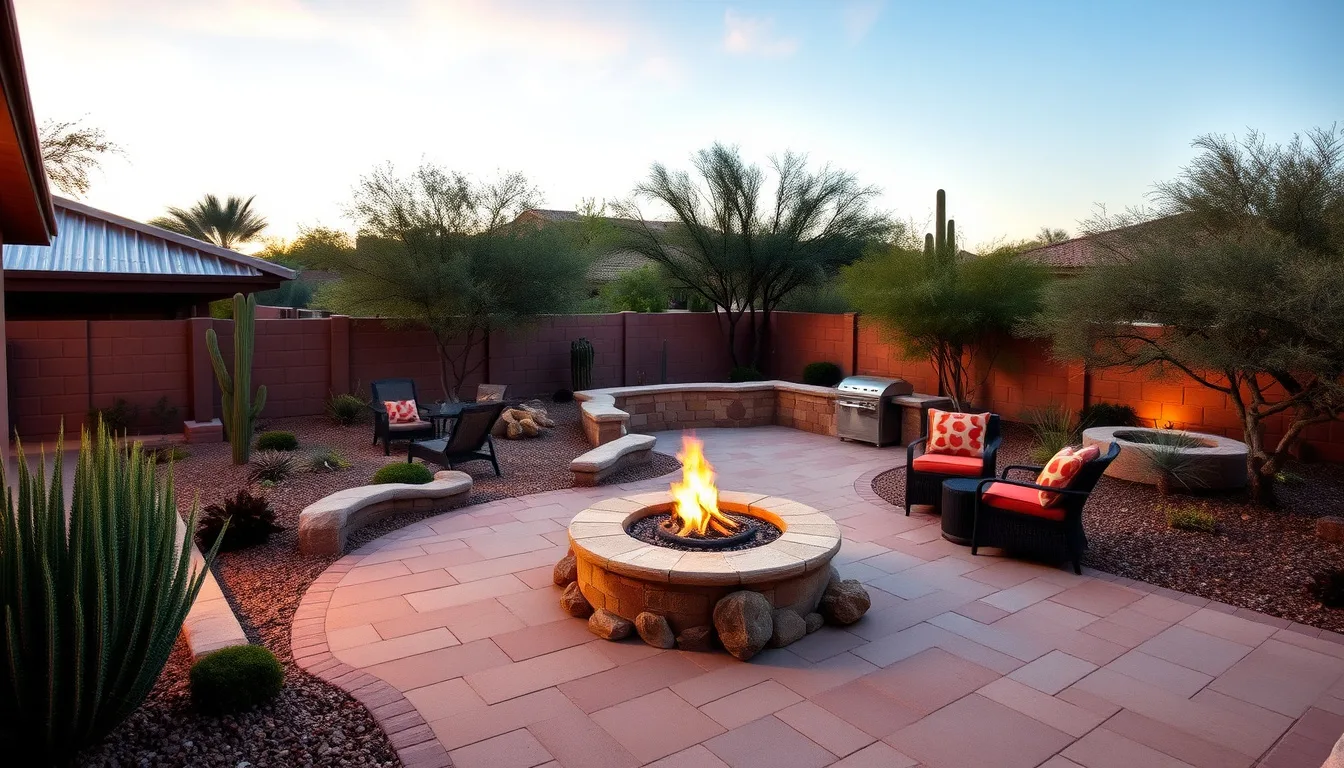
Hardscape & Patio Design — Maricopa, AZ
Hardscape & Patio Design in Maricopa, AZ — Pavers, Patios, and Outdoor Living Built for Desert Heat and Monsoon Storms
Pavers, stamped concrete, retaining walls, and outdoor living spaces — designed for two things most Arizona hardscape ignores: barefoot-usable surface heat and real monsoon drainage.
Materials Chosen for Intense Arizona Sun
Every hardscape material handles direct desert sun differently, and it matters more here than almost anywhere else in the country. A dark paver or stamped-concrete finish that looks great in a catalog photo can become genuinely too hot to walk on barefoot by mid-afternoon in July. We select material color and finish with that in mind — lighter, more heat-reflective paver tones and finishes for surfaces that will see bare feet, reserving darker material for accent bands, borders, or shaded areas where surface heat isn't a daily concern.
Natural stone, paver, and stamped-concrete options all have a place depending on the look and budget, but the material conversation always includes how the surface will actually feel to stand on in August, not just how it photographs.
Retaining Walls for Desert Grade Changes
Many Maricopa lots have real grade changes — a sloped backyard, a raised planting bed, a drop-off at the property line — and retaining walls are how those changes get handled safely and permanently rather than eroding over time. We design retaining walls to hold the grade they're built for, with drainage built into the wall itself so water pressure doesn't build up behind it during a monsoon storm.
A retaining wall built without proper drainage behind it is one of the more common hardscape failures we get called to fix — the wall itself might be structurally fine, but trapped water eventually pushes it out of alignment. We design and build ours to avoid that failure point from the start.
Monsoon Drainage Engineered Into Every Design
Arizona's monsoon season, roughly late June through September, brings sudden, intense, short-duration rainfall — storm intensities around 1.5 inches per hour are common during monsoon cells. That's a defining regional stress test for any hardscape that isn't graded and drained correctly, and it's the single biggest engineering consideration in our patio and paver designs.
General best practice — maintaining roughly a 2% slope away from the home's foundation, avoiding directing concentrated water flow onto a neighboring property, and designing for monsoon-intensity storm rates — is sound guidance regardless of exact jurisdiction, and we build every hardscape design around it. Where a patio or courtyard sits at a natural low point, drainage pipes or deck drains are designed and installed before the hardscape surface goes down, since retrofitting drainage after pavers are already set is significantly more difficult and expensive.
We also build in a small intentional grade break at paver and patio seams so water has somewhere to go rather than pooling and trapping at the transition — a detail that's easy to skip and shows up as standing water the first real storm after installation.
- General best practice: roughly 2% slope away from the foundation
- Design storm intensity: ~1.5 inches per hour, common during monsoon cells
- Drainage installed before hardscape at any natural low point, not retrofitted after
Outdoor Living Add-Ons
A patio is often just the starting point. Fire pits, seat walls, and shade structures are some of the most requested additions, and they get planned into the hardscape layout from the beginning rather than bolted on afterward — fire pit placement affects paver layout and clearance, seat walls double as retaining structure on a sloped yard, and shade structures affect which parts of the patio actually stay usable through a Maricopa summer.
Designing these together, rather than treating the patio as one project and the fire pit as a separate later one, is what makes an outdoor living space feel cohesive instead of assembled piecemeal.
Caliche Soil and Base Prep
Caliche — a hard, calcium-carbonate-cemented soil layer common throughout the low desert, including the Maricopa and Pinal County area — drains poorly and is a frequent cause of unexpected pooling or erosion around new hardscape if it isn't accounted for during grading and base prep. It also affects how deep and how compacted a paver base needs to be to stay stable over time.
We check for caliche during the site evaluation, not after excavation starts, so the base design accounts for it from the beginning rather than requiring a mid-project change order.
Confirming Local Code Before We Build
The City of Maricopa is in Pinal County, not Maricopa County, and drainage and grading code can differ between jurisdictions even when the underlying engineering guidance is the same. We treat the 2%-slope and monsoon-storm-intensity standards above as general Arizona desert-hardscape best practice, and we confirm exact code requirements with the City of Maricopa's building and planning department on any project where it matters, rather than assuming a Maricopa-County code section applies to a Pinal County project.
Cost by Project Type and Square Foot
Hardscape is typically the highest-cost category in a landscape project, since it involves excavation, base material, and skilled installation rather than plant material. Cost varies significantly by project type — a simple paver walkway costs far less than a full patio with a retaining wall and fire pit — and by square footage and material tier selected. We quote hardscape work after an on-site visit so the price reflects your yard's actual grading, soil, and drainage needs, not a generic per-square-foot number.
Get Your Hardscape Estimate
Every hardscape project starts with a free on-site visit to assess grading, drainage, and how you want to use the finished space. Call 844-967-5247 or email josh@contractorschoiceagency.com.
We design and build hardscape and patios across Maricopa, AZ and nearby communities including Casa Grande, Chandler, Sun Lakes, and the Ak-Chin/Stanfield area.
Hardscape & Patio Design FAQs
Questions before you book
Cost depends heavily on scope — a small xeriscape refresh might run a few thousand dollars, while a full backyard design-build with hardscape, turf, and irrigation can run well into five figures. We provide a fixed price after an on-site visit, not a phone-quote guess.
Hardscape (pavers, retaining walls, patios) and irrigation infrastructure typically carry the highest material and labor costs of any landscape project, followed by large-scale tree work and full-yard design-builds; plant material and mulch/rock ground cover are usually the least expensive line items by comparison.
Making sure drainage and grading are correctly designed before storms hit is the real fix — proper slope away from the home, drains at low points, and secured/well-anchored hardscape all matter far more than any after-the-fact patch once a storm has already caused erosion or pooling.
Skilled landscape labor in the Phoenix-metro/West Valley area commonly runs in that range or higher depending on the specialty (design, hardscape, irrigation troubleshooting) — what matters more than the hourly number is the total project price and whether it's fixed upfront, which is how we quote every job.
Yes — estimates and on-site inspections are free across our Maricopa, AZ service area and nearby communities including Casa Grande, Chandler, Sun Lakes, and the Ak-Chin/Stanfield area.
Ready for a yard that works with the desert, not against it?
Free on-site estimates for Maricopa and the surrounding West Valley — design, installation, and maintenance built for real Arizona water bills.