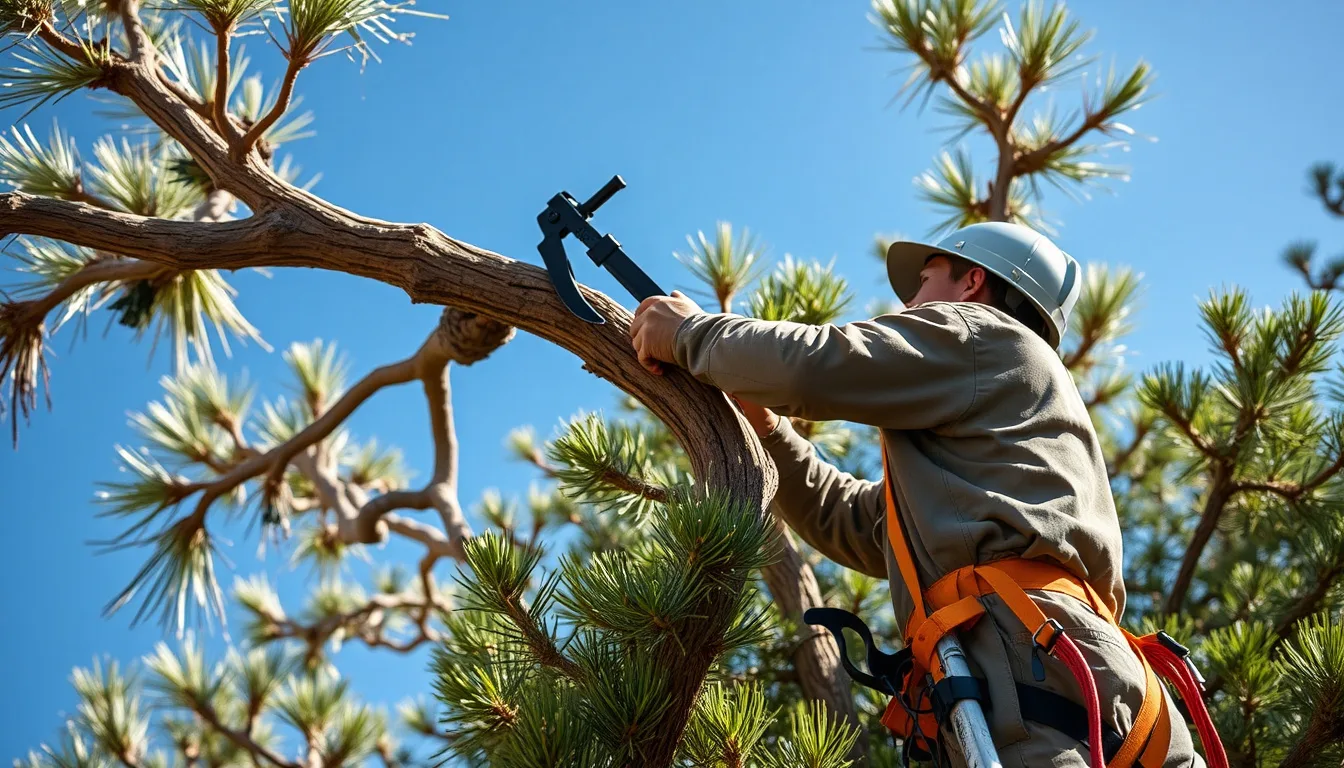
TREE TRIMMING & CARE
Tree Trimming & Care in Maricopa, AZ — Proper Pruning for Desert and Ornamental Trees
Desert-native trees like mesquite and palo verde need a different pruning approach than typical suburban shade trees — and over-pruning is one of the most common, most damaging mistakes we see on Maricopa properties.
Why Desert-Native Trees Need Different Pruning Technique
Maricopa properties typically carry a mix of desert-native trees — mesquite, palo verde, ironwood — and non-native ornamentals planted for shade or curb appeal, and treating them the same way at pruning time is one of the most common mistakes homeowners and inexperienced crews make. Desert-native trees evolved an open, multi-trunk, wind-permeable canopy structure specifically to survive the low desert's combination of intense sun and sudden monsoon wind gusts. Pruning them into a dense, rounded, suburban-shade-tree shape removes the very structure that makes them wind-resistant in the first place.
Ornamental trees, by contrast, are often selected precisely for a denser canopy and more shade, and generally tolerate more conventional pruning approaches. The right technique depends on species, age, and structural history — a young palo verde being trained for good branch spacing needs a very different approach than a mature mesquite that's already established its canopy. We assess each tree individually rather than running every tree on a property through the same cut pattern.
Ironwood, less commonly planted than mesquite or palo verde but still present on older Maricopa-area lots, is slower-growing and generally needs the lightest touch of the three — heavy pruning on a mature ironwood can set its canopy back for years given how slowly it recovers. Knowing which species can tolerate a heavier structural pass and which need a conservative, minimal-cut approach is exactly the kind of judgment call that separates a trained crew from a lawn-and-landscape generalist picking up a chainsaw for the day.
The Lion-Tailing Problem — and Why It Weakens Trees
"Lion-tailing" — stripping interior and lower branches while leaving foliage clustered only at the branch tips — is a widespread over-pruning practice in the desert Southwest, often done because it looks tidy and requires less follow-up work. It's also one of the most damaging things that can happen to a desert tree. Removing interior branching shifts weight and wind resistance out to the branch tips, which is the exact opposite of what a tree needs to stay upright through a monsoon wind event.
A lion-tailed tree looks fine on a calm day and then fails at the worst possible moment — a sudden 50-plus mph monsoon outflow gust catching a canopy with all its wind-load concentrated at the tips instead of distributed through the interior structure. We prune to preserve interior branching and a naturally tapered canopy specifically because it keeps the tree's wind-resistance intact, even though it takes more skill and more time than a quick lion-tail job.
Safety and Structural Pruning Near Homes, Driveways, and Walls
Beyond general canopy health, a meaningful part of tree trimming in a built-out Maricopa subdivision is structural pruning for safety — clearing branches away from rooflines, power lines, driveways, and shared block walls before they become a problem rather than after. Low limbs over a driveway or walkway get raised for clearance; branches with included bark or a weak union that could fail in wind get identified and removed while they're still small and manageable rather than left until they're a large limb over a patio.
This kind of proactive structural work matters more in the low desert than in milder climates, precisely because monsoon wind events are sudden and intense rather than gradual — a weak branch union that would slowly fail over years in a calmer climate can fail all at once here. We flag structural risk points during every trim so a homeowner knows what's been addressed and what to watch going forward, rather than just cutting whatever's overgrown and calling it done.
Shared block walls between neighboring properties are a common friction point in Maricopa's HOA subdivisions — a tree that's grown branches over a fence line or wall into a neighbor's yard is a routine request we handle regularly, trimmed back to the property line without damaging the tree's overall structure or leaving an obviously lopsided canopy on the visible side.
Seasonal Timing for Desert Tree Trimming
Timing matters as much as technique. Late fall through early spring — outside of active summer heat and ahead of the June–September monsoon window — is generally the best time for major structural pruning on desert-native trees, since it lets the tree heal cuts before the stress of extreme summer temperatures and gives the canopy time to settle into its new structure before monsoon winds test it.
Light, targeted pruning for clearance or storm-damage cleanup can happen any time of year when it's genuinely needed, but we recommend against heavy structural pruning right before or during monsoon season, since a freshly and heavily pruned tree hasn't had time to adjust and can actually be more vulnerable to wind stress in the weeks immediately following a major cut. We plan major trims around this calendar rather than defaulting to whenever a homeowner happens to call.
Summer trimming, when it happens at all, is generally limited to genuine safety issues — a broken limb after a monsoon storm, a branch that's died back and needs removal before it falls — rather than routine shaping, since a tree under summer heat stress recovers from cuts more slowly and pruning it heavily in July can do more harm than good.
Palm Tree Trimming
Palm trees are common throughout Maricopa subdivisions as accent and street-facing plantings, and they need their own specialized service separate from mesquite or palo verde pruning — removing dead fronds and old seed pods, both for appearance and because dead fronds are a genuine fire and falling-debris hazard during high wind. Palm trimming is typically offered as an add-on alongside a broader tree-care visit rather than a standalone service, since most properties only have one or two palms compared to a larger population of desert-native shade trees.
We trim palms on a schedule that keeps dead material from accumulating for long stretches, since an overdue palm can carry a heavy load of dry fronds that becomes both an eyesore and a real hazard in a wind event. Fronds hanging low over a walkway or driveway also get raised for clearance during the same visit, and we check the crown for any pest activity or disease signs while we're already up there.
Tree Trimming Cost in Maricopa, AZ
Tree trimming cost depends on tree size, species, accessibility, and how much structural work is needed versus routine maintenance pruning — a young ornamental needing light shaping costs meaningfully less than a mature mesquite with significant deadwood or storm-damage cleanup. Palm trimming is typically priced per tree as an add-on to a broader visit.
We quote every job after seeing the tree in person rather than estimating over the phone, since two trees of similar size can need very different amounts of work depending on how they've been pruned in the past — a previously lion-tailed tree, for example, often needs a corrective, multi-visit approach rather than a single cleanup pass. Multi-tree properties, common on larger Maricopa lots, are typically quoted as a single visit covering the whole property rather than tree by tree.
Schedule a Free Tree Trimming Estimate
If a tree on your property has been over-pruned in the past, has branches encroaching on your roofline or driveway, or just hasn't been professionally assessed since it was planted, we'll take a look and tell you honestly what it needs.
Call 844-967-5247 or email josh@contractorschoiceagency.com for a free tree trimming estimate in Maricopa, AZ and nearby communities including Casa Grande, Chandler, Sun Lakes, and the Ak-Chin/Stanfield area.
Tree Trimming & Care FAQs
Questions before you book
Yes — regular structural pruning keeps desert-native trees like mesquite and palo verde strong against monsoon winds and prevents the over-pruning ("lion-tailing") that actually weakens trees long-term. It's a different technique than typical shade-tree pruning, focused on preserving interior branching rather than stripping it.
Late fall through early spring is generally the best window for major structural pruning, since it lets cuts heal before extreme summer heat and gives the tree time to settle before monsoon winds arrive in June. We avoid heavy structural pruning right before or during monsoon season.
Larger-scale tree work and structural pruning on mature trees typically carries higher labor costs than routine maintenance trimming, similar to how hardscape and irrigation infrastructure tend to be the most expensive parts of a broader landscaping project. Cost depends heavily on tree size, condition, and accessibility, which is why we quote after an on-site look.
A routine trim or palm cleanup is usually a same-day visit. Larger structural pruning jobs, corrective work on a previously over-pruned tree, or trimming multiple mature trees on one property may take longer or be scheduled across more than one visit — we'll give you a realistic timeline during the estimate.
Ready for a yard that works with the desert, not against it?
Free on-site estimates for Maricopa and the surrounding West Valley — design, installation, and maintenance built for real Arizona water bills.