The Complete Guide to Desert & Xeriscape Landscaping in Maricopa, AZ
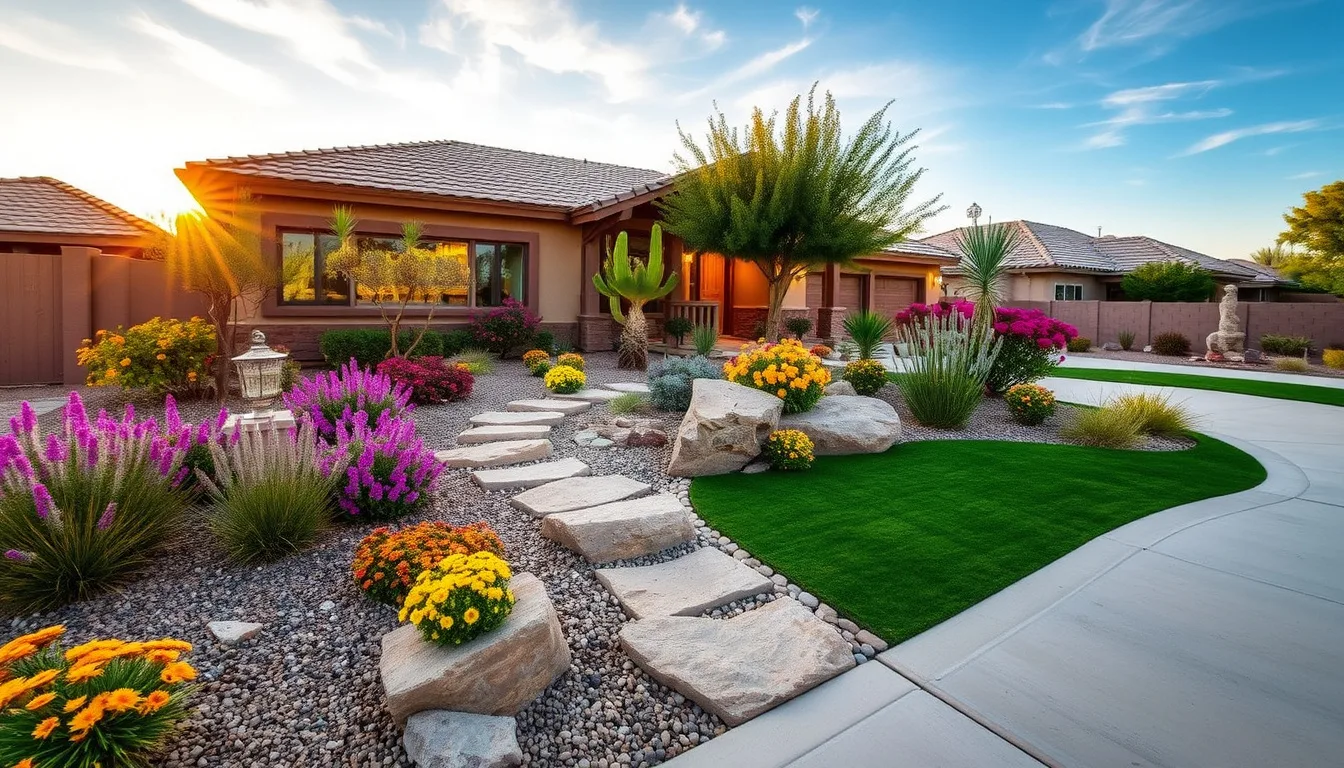
If you've driven through a Maricopa, AZ neighborhood built in the last ten years, you've already seen more xeriscape than you probably realized. It's not the yard with nothing but white rock and a single saguaro — it's the yard with a mature palo verde providing real shade, a drift of orange globe mallow blooming along the walkway, and decomposed granite doing the work that a water-hungry lawn used to do. That's what xeriscape actually looks like in 2026, and in the low desert of Pinal and Maricopa counties, it's become the default way to landscape a home, not the exception.
This guide walks through what xeriscape really means, the water and cost numbers behind why so many homeowners are making the switch, which plants actually work here, how to get a design approved by an HOA architectural committee on the first try, and the honest tradeoffs — because no landscaping decision is entirely upside. If you're weighing a full conversion or just want to understand what you're looking at in a neighbor's yard, this is the complete picture.
What Xeriscape Actually Means in 2026
The word "xeriscape" gets a bad rap because a lot of people picture the laziest possible version of it: a yard stripped of turf and covered wall-to-wall in gravel with maybe a barrel cactus stuck in the middle. That's not xeriscape — that's a yard that skipped the design step. True xeriscape is a planned, water-efficient landscape that's still full of living plants, shade, color, and texture. It's landscaping designed to work with the desert instead of importing a green, water-hungry lawn that has to be fought against the climate every single week of the year.
The shift toward this style of landscaping in the Phoenix-metro area has been dramatic, and it's already happened for most of your neighbors. According to the Arizona Municipal Water Users Association (AMWUA), roughly 80% of single-family properties in the City of Phoenix had majority-grass landscapes back in the 1970s. Today, that figure is under 9%. That's not a fringe trend — that's a near-total generational shift in how homes in this region are landscaped, and Maricopa, AZ subdivisions built over the last two decades reflect that same shift. A well-designed xeriscape yard today reads as normal, well-kept curb appeal, not as a compromise or a "green yard we couldn't afford to keep."
The Seven Principles of Xeriscape, Explained for Maricopa, AZ
Xeriscape isn't a single technique — it's a framework, originally developed by water utilities and university extension programs, built around seven principles. Here's what each one actually means when it's applied to a Maricopa, AZ yard rather than a generic national guide.
- Planning and design. Every successful xeriscape starts with a real plan — mapping sun exposure, drainage, and how the space will actually be used — before a single plant goes in the ground. This is the step that separates a designed xeriscape from a yard that just had its grass removed.
- Soil analysis and improvement. Low-desert soil, including the caliche-heavy ground common throughout Pinal County, often needs amendment before planting so water and roots can actually move through it instead of pooling or drying out too fast.
- Appropriate plant selection. Choosing species that are genuinely adapted to Sonoran Desert conditions — not just "drought tolerant" on a nursery tag, but proven to thrive in Maricopa's summer heat with minimal supplemental water once established.
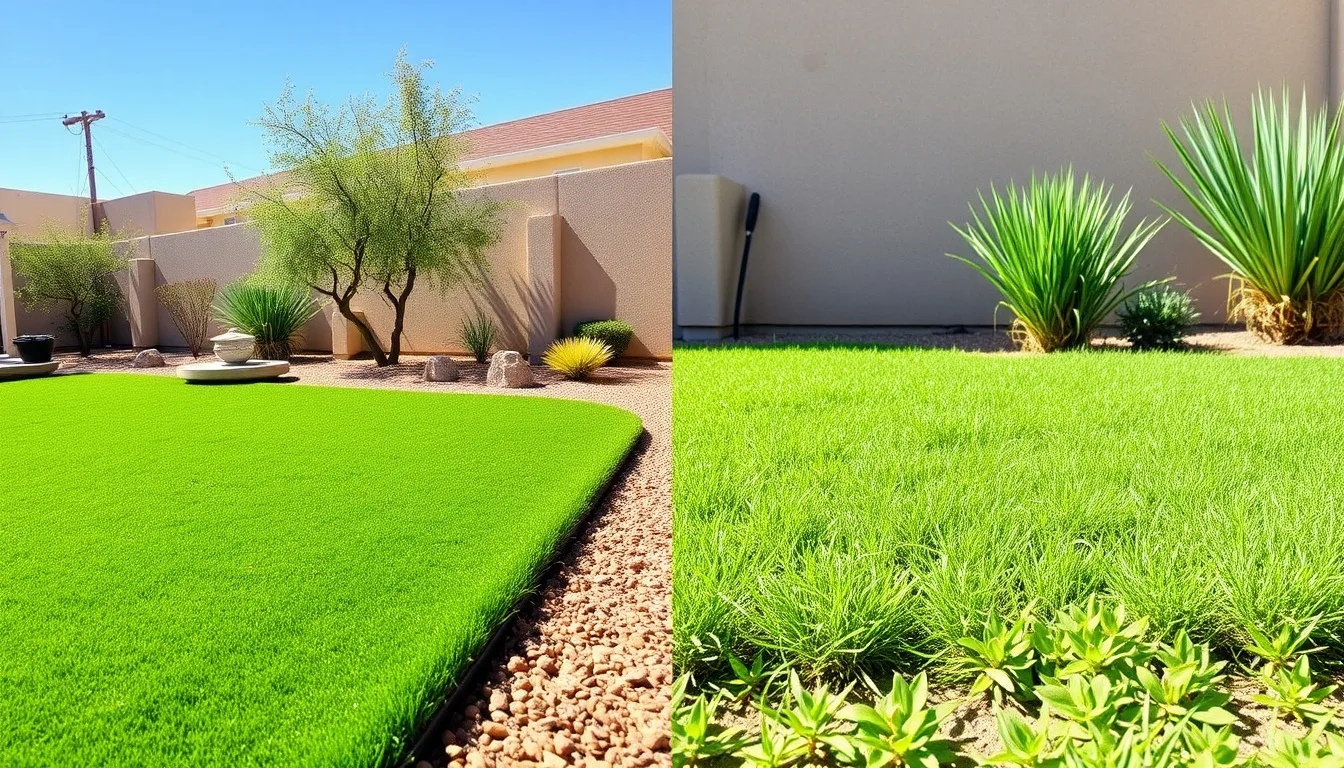
- Practical turf areas. Xeriscape doesn't require eliminating grass entirely — it means using turf (real or artificial) only where it earns its water budget, like a small play area, rather than as the default ground cover for an entire yard.
- Efficient irrigation. Drip irrigation delivering water directly to plant roots, rather than spray heads broadcasting water across open air and pavement, is the backbone of a water-efficient design.
- Mulch. A proper mulch layer — organic mulch or decomposed granite — cuts evaporation from the soil surface, moderates soil temperature, and suppresses weeds, all of which reduce how much supplemental water plants need.
- Appropriate maintenance. Xeriscape still needs care — periodic pruning, weed control, and irrigation checkups — but the maintenance load is lighter and less water-dependent than a traditional lawn.
Applied together, these seven principles are what separate a genuinely designed desert landscape from a yard that just had the grass ripped out and replaced with rock.
Real Water Savings Numbers Homeowners Can Expect
The numbers behind xeriscape's popularity in the Phoenix-metro area are well documented, and they're worth laying out plainly because they're the actual reason this shift happened.
Converting turf to xeriscape is reported to cut outdoor water use by roughly 50%. In concrete terms, that plays out as a real difference in gallons: an average of about 15,000 gallons per year for 1,000 square feet of xeriscape, compared to roughly 35,000 gallons per year for the same 1,000 square feet planted in overseeded winter grass — the comparison where the gap is largest, since overseeded lawns need watering essentially year-round in the low desert.
Looked at another way, through irrigation depth rather than total gallons: a Bermuda or Bermuda-hybrid lawn with winter overseed in the Arizona low desert needs more than 55 inches of irrigation per year to stay green. The average xeriscape needs less than 18 inches per year. That's roughly a third of the water, for a yard that still has shade trees, flowering shrubs, and color.
These aren't small numbers in a state where landscape irrigation is estimated to account for 60–70% of all residential water use, according to the Arizona Department of Water Resources. Outdoor water use isn't a minor line item on an Arizona water bill — for most homes, it's the majority of it, which is exactly why converting the yard has such an outsized effect on total household water consumption.
The bigger picture backs this up at a regional scale. AMWUA's ten member cities — which together serve 3.7 million residents, more than half of Arizona's population — have kept total drinking-water use roughly flat since 2000 despite adding a million residents over that period. Since 1987, the urbanized area's population grew 212% while per-person daily water use actually fell 21%. Xeriscape adoption, at the scale it's happened across the Phoenix-metro region, is a real and measurable part of how that happened.
There's a dollar-cost side to this too: lower maintenance requirements for xeriscape versus turf landscaping have been reported to save homeowners an average of roughly $206 per year — on top of the water-bill savings, not instead of them.
Plant Palette for the Low Desert
A common misconception is that xeriscape means a narrow, boring plant list. In reality, the Sonoran Desert supports a wide range of trees, shrubs, and accent plants that thrive here with minimal supplemental water once established — the challenge is picking the right ones for each spot in the yard, organized by sun exposure and water need.
Shade trees. Palo verde, mesquite, and ironwood are the three workhorse native trees for Maricopa-area yards. All three tolerate full summer sun, need minimal water once established, and provide the real shade canopy that makes a desert yard usable in July instead of just decorative. Palo verde in particular is prized for its green bark and yellow spring bloom.
Flowering color. Desert marigold and globe mallow are reliable, low-water bloomers that add sustained color through much of the year without the water demands of traditional annual flower beds. Both handle reflected heat off pavers and block walls better than most imported ornamentals.
Structural accents. Red yucca, agave, and prickly pear give a xeriscape design its architectural backbone — vertical form, texture, and year-round presence even when nothing is in bloom. These are also some of the lowest-water plants on the list, ideal for the hottest, most exposed corners of a yard.
The best designs group plants by water zone — putting the thirstiest plantings (which is still low-water by any non-desert standard) closest to the house where a drip line is easy to run, and the toughest, most drought-tolerant specimens toward the yard's perimeter where irrigation is minimal.
Does Xeriscaping Affect Resale Value?
This is a direct question homeowners ask before committing to a conversion, and the honest answer is that xeriscaping is viewed as value-neutral to positive in the Phoenix-metro and West Valley market. Given that roughly 9 in 10 single-family Phoenix-area properties have already moved away from majority-grass yards, a well-designed xeriscape reads to buyers and appraisers as normal, well-maintained curb appeal — not as a compromise or a downgrade from a "real" lawn. A struggling, water-stressed grass lawn in August is a far bigger red flag to a buyer than a thoughtfully designed desert landscape with mature trees and color.
The key word throughout is "designed." A yard with bare gravel and no plant investment doesn't carry the same curb-appeal weight as a xeriscape built around mature trees, layered plantings, and intentional hardscape — which is exactly why the design step matters as much as the plant selection.
HOA Compliance: What Most Maricopa-Area HOAs Require
Maricopa, AZ is overwhelmingly built out as HOA-governed subdivisions, and "will this pass my HOA" is one of the most common — and least addressed — questions homeowners have before starting a xeriscape or turf conversion. Getting this right from the first sketch saves weeks of back-and-forth with an architectural review committee.
Common CC&R landscaping provisions across the region tend to include a minimum ground-cover percentage for the visible front yard — often cited in the 80–90% range — along with approved or restricted plant lists (frequently referencing Arizona Department of Water Resources low-water-use species), specific rules on rock color and size, explicit policies on artificial turf placement and type, tree-placement requirements, and irrigation requirements. That last one surprises a lot of homeowners: many HOAs still require some form of working irrigation even in a fully xeriscaped yard, not to grow grass, but to keep the desert-adapted plantings alive and the landscape maintained. A commonly cited baseline for tree density in Arizona municipal and HOA landscape codes is roughly one tree for every 50 linear feet of street frontage.
It's also worth knowing that Arizona HOA law has trended in recent years toward giving homeowners more water-conservation-friendly freedom — state-level protections have expanded what HOAs can and cannot restrict when a homeowner wants to convert turf to low-water landscaping.
Every HOA is different, and the specific percentages and plant lists above are general regional guidance, not a guarantee for any one community's CC&Rs. Before finalizing a design, we recommend confirming your specific community's requirements with its architectural committee — and when we design a xeriscape conversion, we build it around your HOA's known requirements from the first concept sketch, not as a fix after a submittal gets rejected.
Xeriscape vs. "Zeroscape" — The Real Difference
These two terms get used interchangeably, and that confusion causes a lot of yards to look worse than they need to. Xeriscape is a designed, water-efficient landscape that still includes living plants selected specifically for low water need — trees for shade, flowering shrubs for color, structural accents for year-round interest. "Zeroscape," sometimes called zero-scaping, usually refers to a hardscape- and rock-only yard with little to no plant life at all.
Zeroscape technically saves water too, but it gives up the shade, cooling, curb appeal, and property-value benefit that comes from real plant material. We design true xeriscapes, not zeroscapes, because the plants are doing real work — shading walls and pavement that would otherwise radiate heat back into the yard, softening the look of a home, and building the kind of curb appeal that a rock-only yard simply can't match.
Cons and Tradeoffs, Addressed Honestly
No landscaping approach is without tradeoffs, and a guide that only lists benefits isn't being straight with you. The real downsides of xeriscaping are worth naming directly:
- Upfront conversion cost. Removing existing turf, amending soil, and installing new plants and drip irrigation is a real investment, even though it typically costs less than an equivalent hardscape-heavy project since it's driven by plants and ground cover rather than structural work.
- A plant-establishment period. Newly installed desert plants still need regular watering while their root systems develop — often for the first one to two growing seasons — before they can rely on their natural drought tolerance. A xeriscape isn't zero-water from day one; it becomes low-water once established.
- A real design skill requirement. A poorly planned xeriscape — plants scattered without a real plan, no attention to mature size or shade canopy — can end up looking sparse and uninviting. This is the single biggest reason people picture "gravel and a cactus" when they hear the word xeriscape; it's a failure of design, not a limitation of the approach itself.
A professionally designed xeriscape addresses all three of these directly: a fixed-price quote up front so there's no cost surprise, an establishment-period irrigation plan built into the design, and a layout that accounts for mature plant size so the yard fills in and looks intentional rather than sparse.
The Cheapest Way to Xeriscape: A Phased Approach
A full-yard conversion isn't the only path, and for homeowners working with a defined budget, phasing the project is a legitimate strategy rather than a compromise. The most budget-friendly approach starts with the highest-visibility area first — typically the front yard, since that's what drives curb appeal and is often what an HOA cares about most directly — and expands to the backyard in a later phase.
Within that first phase, using decomposed granite or gravel ground cover over the largest areas, and selecting smaller or younger plant material that fills in naturally over a season or two rather than paying extra for mature specimens, keeps upfront cost down without cutting corners on the design itself. We can put together a phased plan for any budget, with each phase designed to look complete and intentional on its own rather than like an unfinished project waiting for a second act.
Frequently Asked Questions
What are the seven principles of xeriscape? Planning and design, soil analysis and improvement, appropriate plant selection, practical turf areas, efficient irrigation, mulch, and appropriate maintenance — the same framework taught by university extension programs, applied specifically to Maricopa, AZ's low-desert conditions.
What are the cons or disadvantages of xeriscaping? The main tradeoffs are upfront conversion cost, a plant-establishment period where new desert plants still need regular watering to root in, and a design learning curve if it's done without a plan. A professionally designed xeriscape addresses all three.
Does xeriscaping increase property value in Arizona? Xeriscaping is widely viewed as value-neutral to positive in the Phoenix-metro and West Valley market given how mainstream low-water landscaping has become — roughly 9 in 10 single-family Phoenix properties have already moved away from majority-grass yards.
What is the cheapest way to xeriscape a yard? Phasing the conversion — starting with the highest-visibility front yard and expanding later — using decomposed granite or gravel over large areas, and selecting smaller, younger plant material that fills in over time are the most budget-friendly approaches.
What's the difference between xeriscape and "zeroscape"? Xeriscape is a designed, water-efficient landscape that still includes living plants selected for low water need. "Zeroscape" usually refers to hardscape- and rock-only yards with little to no plant life — we design true xeriscapes because plant life matters for shade, curb appeal, and long-term property value.
Will my HOA approve a xeriscape conversion? Most Maricopa-area HOAs now permit and even encourage low-water landscaping, but nearly every community has its own architectural-review process, approved plant lists, and specific rules on rock color, size, and ground-cover percentage. We design with your specific HOA's guidelines in mind from the first sketch.
Does my HOA require irrigation even if I go xeriscape? Often, yes. Many HOAs require some form of working irrigation to keep desert plantings alive and the property maintained, even in a fully xeriscaped yard — this is typically satisfied with an efficient drip system, not a traditional lawn-style sprinkler system.
Is xeriscaping really low-maintenance, or still a lot of work? Xeriscaping is genuinely lower-maintenance than a traditional lawn — no mowing, less watering, less fertilizing — but it isn't zero-maintenance. Desert-adapted plants still need periodic pruning, rock beds need occasional weed control, and irrigation systems need checkups.
Ready to See What Xeriscape Could Look Like at Your House?
Every yard in Maricopa is different — different sun exposure, different HOA, different budget. The fastest way to find out what a xeriscape conversion would actually cost and look like at your address is a free, on-site estimate. We'll walk your yard, talk through your HOA's specific requirements if you have one, and give you a fixed price, not a phone-quote guess.
Call 844-967-5247 for a free estimate, or reach out online to get started.
Ready for a free estimate?
On-site estimates for Maricopa and the West Valley — water-wise design, honest pricing.