How Much Does Landscaping Cost in Maricopa, AZ? 2026 Price Guide
"How much does landscaping cost in Maricopa, AZ?" is usually the first question a homeowner types into Google before they ever pick up the phone — and the honest answer is "it depends," but not in the vague, dodge-the-question way that phrase usually gets used. Cost in the low desert comes down to a short list of real variables: project type, yard size, how much existing turf or hardscape has to come out first, and the material tier you choose. Once you know those levers, a landscaping quote stops feeling like a mystery.
This guide walks through real cost ranges for the services Maricopa, AZ homeowners ask about most — xeriscape conversion, artificial turf, hardscape and patios, irrigation repair, and ongoing maintenance — plus what actually drives the number up or down, and how to make sure the quote you get is one you can trust.
Quick-Answer Cost Ranges by Project Type
Every yard is different, so treat these as planning ranges, not a phone quote — but they're a solid starting point for budgeting a project in the Maricopa, AZ area.
- Landscape design plans: A standalone design plan (drawings, plant palette, water budget) typically runs from a few hundred dollars for a simple front-yard concept up to several thousand for a full backyard design-build package with hardscape and irrigation layered in.
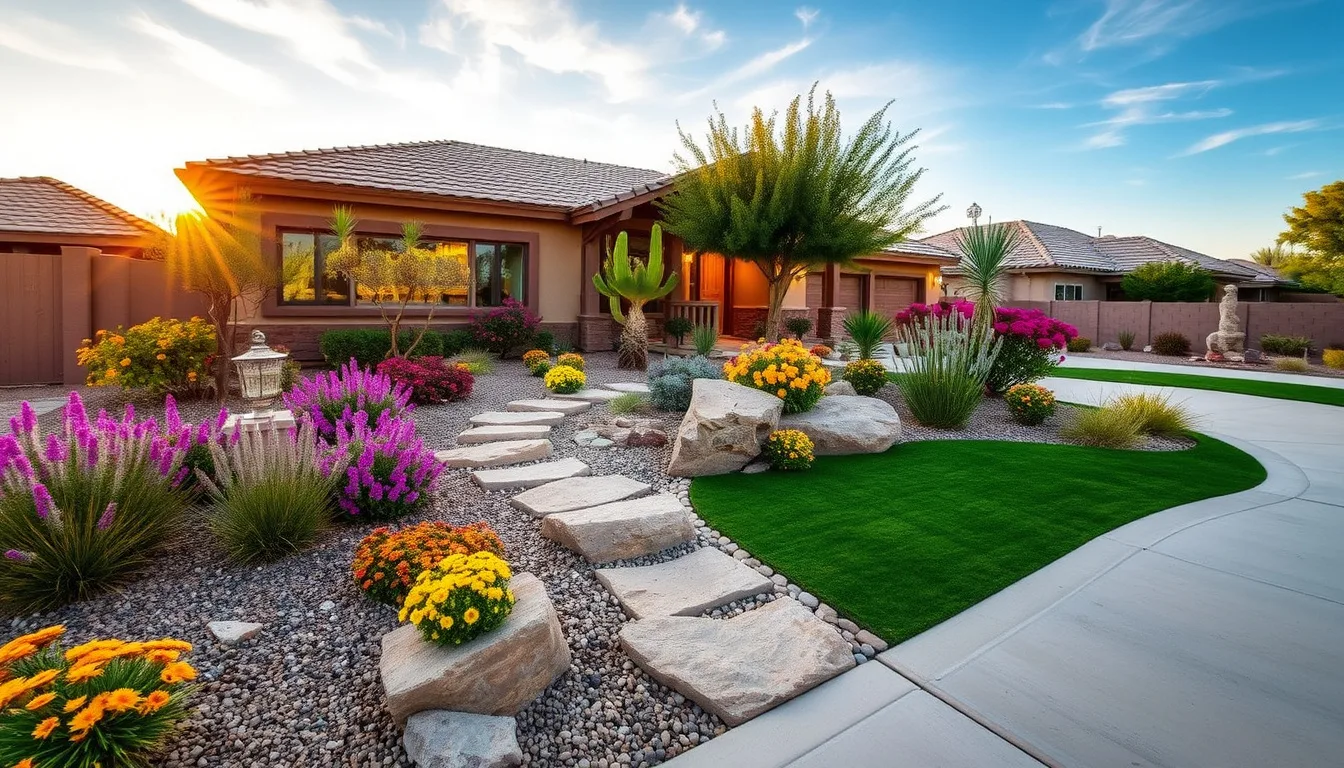
- Xeriscape/desert landscaping conversion: Converting an existing lawn to a properly designed xeriscape is usually priced by square footage and plant material, ranging from a modest few-thousand-dollar refresh of a small front yard to well into five figures for a full-property conversion with mature plant material, boulders, and a new drip system.
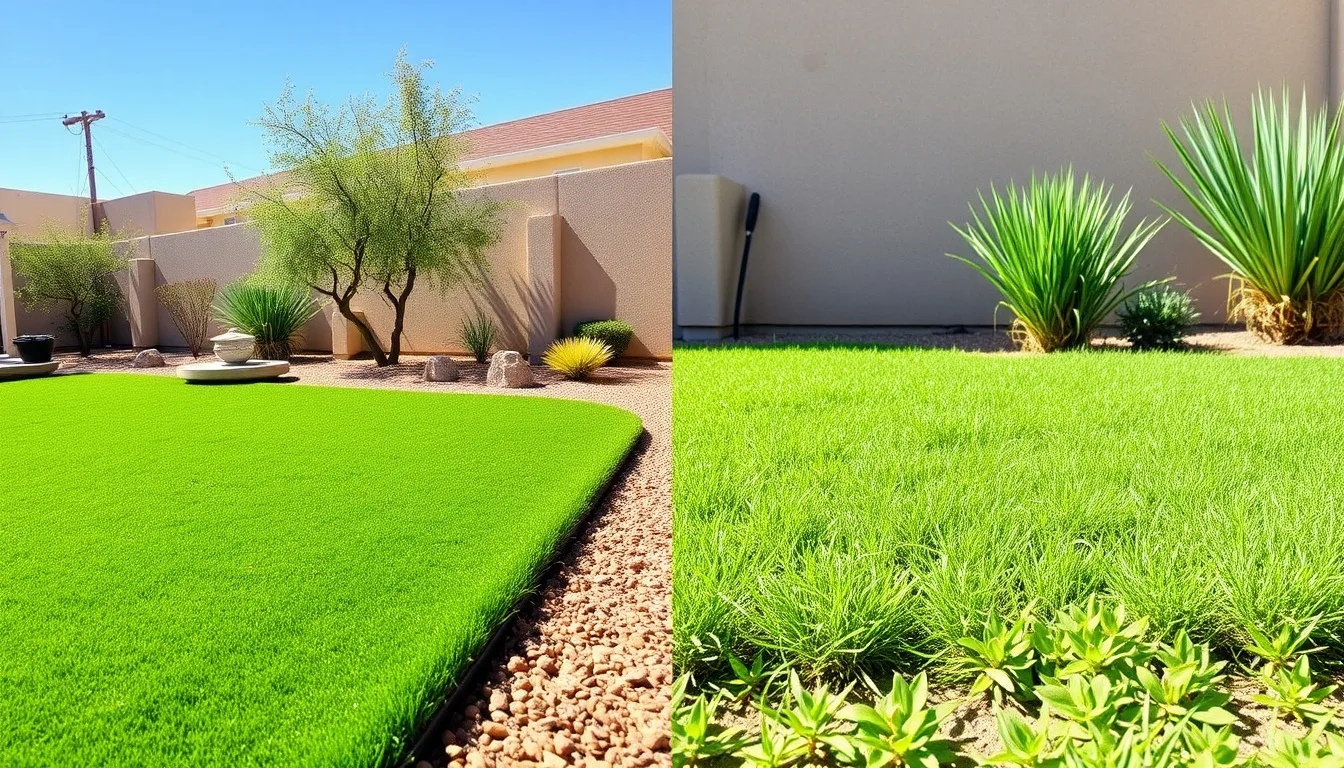
- Artificial turf installation: Because a proper install includes excavation, a compacted base, a drainage layer, and infill — not just rolling out turf — professionally installed synthetic turf commonly runs in the low-to-mid double digits per square foot, with putting greens and top-tier turf blends at the higher end of that range.
- Hardscape and patios: Paver patios, walkways, and retaining walls are priced per square foot (patios) or per linear foot (walls), and hardscape is consistently one of the higher-cost categories in a landscaping project because of the material and labor-intensive base prep it requires — especially where caliche soil has to be broken through.
- Irrigation and sprinkler repair: A single valve, emitter, or sprinkler-head repair is typically a modest fixed-price job; a full drip-system install or redesign for a xeriscape conversion is a larger project priced by zone count and the size of the area being irrigated.
- Landscape maintenance: Recurring maintenance plans are usually priced monthly based on property size and visit frequency, with one-time seasonal cleanups priced separately by scope.
Xeriscape conversion frequently comes in below an equivalent hardscape-heavy project since it's driven by plants and groundcover rather than structural materials — but the honest comparison isn't the sticker price on day one. It's total cost over the years you'll actually own the property, since the average xeriscape needs less than 18 inches of irrigation a year against more than 55 inches for a Bermuda lawn with winter overseed, and lower maintenance costs have been reported to save desert-landscaped homeowners an average of roughly $206 a year compared to turf.
What Actually Drives Your Price
Two yards that look similar from the street can price out very differently once a crew is actually on-site, because the real cost drivers are mostly invisible from the curb.
Yard size is the obvious one — more square footage means more material, more labor hours, and more plants or turf to install — but it's rarely the biggest swing factor.
Existing turf or hardscape removal adds real cost before the new project even starts. Ripping out an established Bermuda lawn, breaking up old concrete, or clearing overgrown shrubs is its own labor line item, and it's one homeowners frequently underestimate when comparing a quote to a rough online calculator.
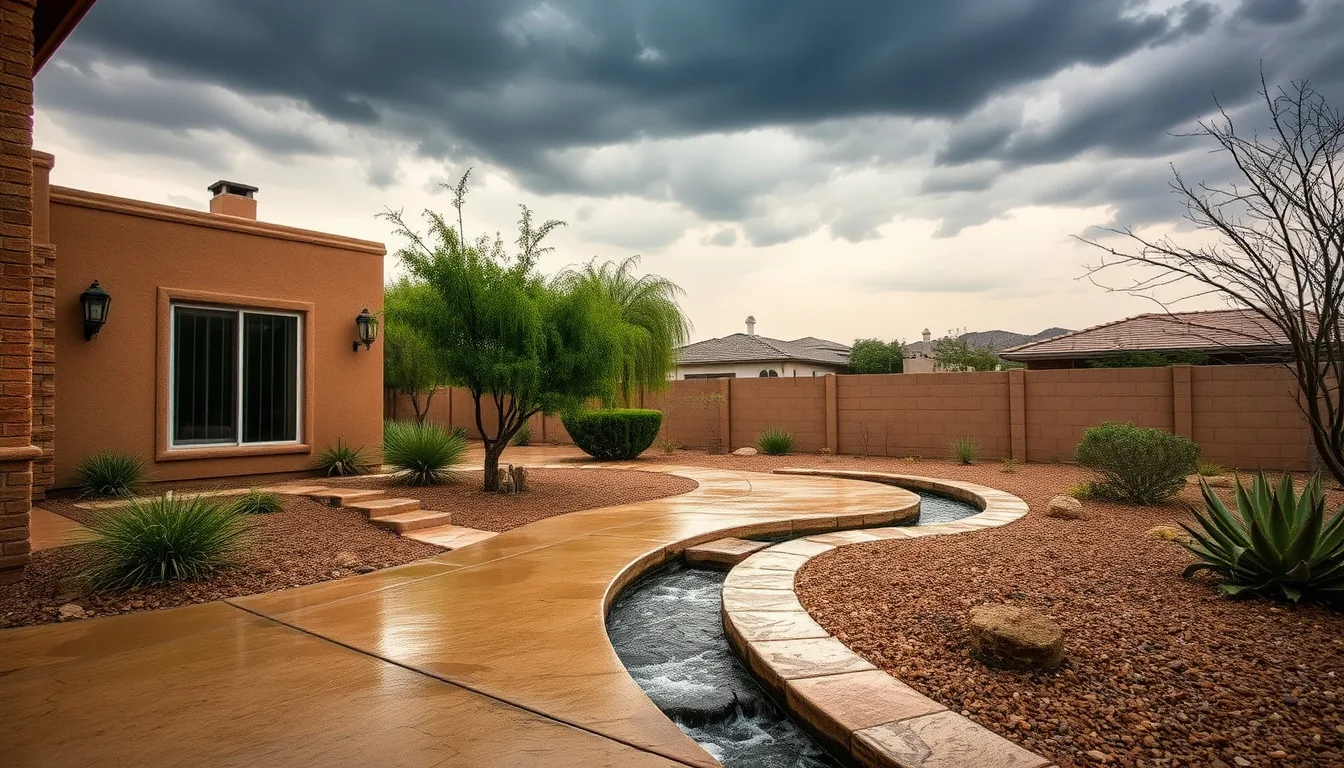
Soil and grading work matters more in Maricopa than in most markets. Caliche — the hard, calcium-carbonate-cemented soil layer common throughout the low desert — drains poorly and often has to be broken through or worked around during base prep for turf, patios, and even new plantings. A yard that hits caliche close to the surface costs more to prep correctly than one that doesn't, and skipping that step is exactly how monsoon storms end up pooling against a new patio a year later.
Material tier is the lever homeowners have the most direct control over. Decomposed granite versus larger boulder groundcover, budget versus top-tier turf blends, and standard versus natural-stone pavers all carry meaningfully different price points for the same square footage — which is why two "artificial turf installation" quotes for the same yard can look very different once you compare what's actually specified.
Is $100 an Hour Too Much for Landscape Work?
This is one of the most common questions homeowners search before calling anyone, and the honest answer is: it depends on the work, but it's usually not out of line. Skilled landscape labor — design work, hardscape installation, irrigation troubleshooting — commonly runs at or above that rate in the Phoenix-metro and West Valley market, because it reflects trained labor and specialized equipment, not a padded number.
What matters more than the hourly rate is whether a project is quoted as a fixed price up front or billed hourly with no ceiling. An hourly number on paper doesn't tell you the total cost of a job; a fixed quote after an on-site visit does — which is why we price every project that way instead of guessing over the phone.
What's the Most Expensive Part of a Landscaping Project?
Hardscape — pavers, retaining walls, patios — and irrigation infrastructure typically carry the highest material and labor costs of any landscaping project, followed by large-scale tree work and full-property design-builds. Both hardscape and irrigation involve real engineering: base prep, grading for monsoon drainage, and materials that have to hold up to direct Arizona sun and seasonal ground movement, not just decorative surface work.
Plant material, mulch, and rock groundcover are usually the least expensive line items by comparison — part of why a xeriscape conversion, which leans more heavily on plants and groundcover than structural hardscape, tends to come in at a lower overall cost than a hardscape-heavy backyard build of the same square footage.
DIY vs. Professional: Where Cutting Corners Costs More Later
DIY has a real place in landscaping — spreading mulch, planting a few pots, basic weeding. But two categories consistently cost homeowners more in the long run when they're done without base-prep experience: artificial turf and irrigation.
Turf installed without a properly compacted base and drainage layer looks fine for a season, then starts to shift, wrinkle, or pool water during monsoon storms — and fixing it means tearing out and redoing work that would have cost less to do right the first time. Irrigation is similar: a drip system designed without accounting for how Arizona heat cycling degrades poly tubing and valves, or how mineral-heavy water clogs emitters, tends to fail piecemeal for years rather than all at once, turning into a slow drip of small repair calls instead of one correctly designed system.
The pattern holds for hardscape too. Skipping proper grading and a slope away from the foundation on a new patio is invisible on a sunny day and very visible the first time a monsoon cell drops an inch and a half of rain in an hour.
Financing and Phased Projects
A full backyard design-build doesn't have to happen all at once. Phasing a project — starting with the highest-visibility area, usually the front yard, and expanding later — is one of the most budget-friendly ways to convert a whole property to desert landscaping over time rather than in a single expensive push. The same logic applies to a hardscape-heavy backyard: patio and drainage work now, an outdoor kitchen or fire feature later.
If a full conversion isn't the immediate budget, ask about a phased plan when you request your quote. We design projects that can be broken into stages without having to redo earlier work when the next phase starts.
How to Get an Accurate Quote
The only way to get a number you can actually rely on is an on-site visit, not a square-footage guess over the phone. Yard size alone doesn't tell a contractor whether there's caliche two inches down, how much existing turf has to come out, or what your specific HOA's plant list and rock requirements are going to add to the design process.
When you request an estimate, be ready to talk through what you want the space to do — entertaining, low-maintenance curb appeal, a kid- or pet-friendly play area — whether you're converting existing turf or starting from a bare lot, and any HOA guidelines your community already has on file. A fixed price after that walk-through is worth far more than a fast number based on guesswork.
Frequently Asked Questions
How much does landscaping cost in Maricopa, AZ? Cost depends heavily on scope — a small xeriscape refresh might run a few thousand dollars, while a full backyard design-build with hardscape, turf, and irrigation can run well into five figures. We provide a fixed price after an on-site visit, not a phone-quote guess.
Is $100 an hour too much for landscape work? Skilled landscape labor in the Phoenix-metro/West Valley area commonly runs in that range or higher depending on the specialty — design, hardscape, irrigation troubleshooting. What matters more than the hourly number is the total project price and whether it's fixed upfront, which is how we quote every job.
What is the most expensive part of a landscaping project? Hardscape (pavers, retaining walls, patios) and irrigation infrastructure typically carry the highest material and labor costs, followed by large-scale tree work and full-yard design-builds. Plant material and mulch or rock groundcover are usually the least expensive line items by comparison.
How much does desert landscaping or xeriscaping cost? A xeriscape conversion typically costs less than an equivalent hardscape-heavy project since it's plant-and-groundcover-driven rather than structural, but exact pricing depends on yard size, existing turf removal needs, and plant selection — we quote after seeing the site.
How much does artificial turf installation cost? Pricing depends on square footage, base prep needs, and turf grade selected — a proper install includes base excavation, a drainage layer, and infill, which is why DIY and professional pricing differ significantly.
Get a Real Number for Your Yard
Every yard in Maricopa, AZ carries its own mix of soil conditions, HOA requirements, and existing landscaping to work around — which is exactly why we quote from an on-site visit instead of a generic per-square-foot calculator. Whether you're pricing out a full xeriscape conversion, an artificial turf install, or a hardscape project built to handle monsoon season, we'll give you a fixed price for the actual work your yard needs.
Call 844-967-5247 for a free landscaping estimate in Maricopa, AZ and the surrounding West Valley/Pinal County area.
Ready for a free estimate?
On-site estimates for Maricopa and the West Valley — water-wise design, honest pricing.