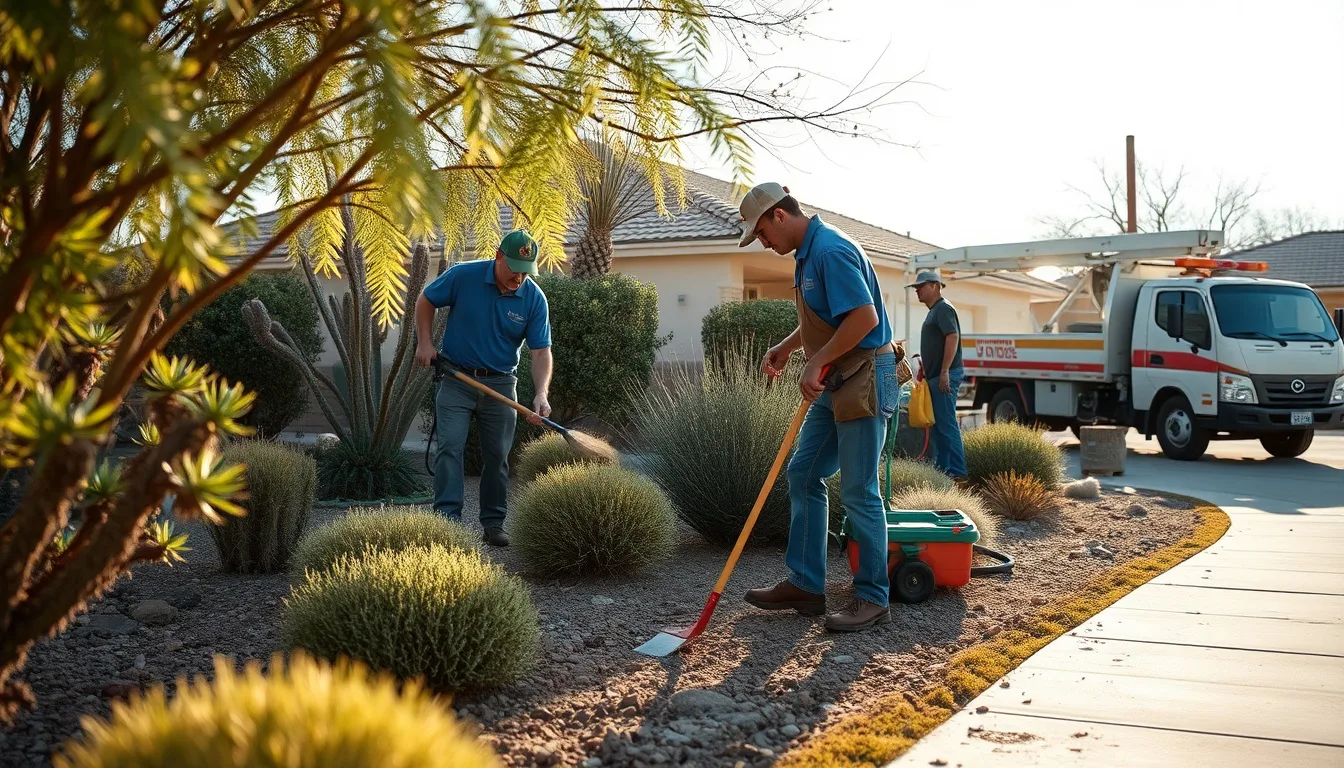
LANDSCAPE MAINTENANCE
Landscape Maintenance in Maricopa, AZ — Keep Your Desert Yard Looking Its Best Year-Round
Desert landscaping is lower-maintenance than a traditional lawn, but it isn't zero-maintenance — regular pruning, weed control, and irrigation checkups are what keep a xeriscaped or desert-adapted yard looking intentional instead of neglected.
What Ongoing Desert Landscape Maintenance Actually Includes
A lot of homeowners who convert to xeriscape, or move into a newer Maricopa subdivision that was built out desert-style from day one, assume maintenance basically disappears once the grass is gone. It doesn't disappear — it changes. Desert-adapted trees and shrubs still need regular structural pruning to keep their natural form and stay sound against monsoon wind, which is a different skill than the boxy hedge-trimming a cool-climate lawn service defaults to. Rock and decomposed-granite beds still collect wind-blown debris, dust, and weed seed that has to be cleared on a schedule or the bed starts looking neglected fast, even though nothing is actively growing out of control the way turf does.
Irrigation lines and emitters are the real lifeline of a xeriscaped yard, and they need periodic inspection — a xeriscape with a failed drip line doesn't just look a little rough, it can lose plants that took years to establish. Our maintenance visits cover structural pruning, rock-bed weed control, debris cleanup, irrigation-system checks, and seasonal color rotation where a property calls for it — everything a desert yard genuinely needs to stay sharp, at a noticeably lower overall frequency and cost than mowing, edging, and fertilizing a traditional lawn ever required.
The plants themselves also need a trained eye. A stressed or overwatered desert plant shows different warning signs than a stressed lawn — yellowing on a mature agave, dieback on a globe mallow, or a red yucca that's stopped flowering can all point to an irrigation or placement issue rather than something a homeowner would catch by casual observation. Part of what a maintenance visit provides is that trained eye checking the whole property, not just the tasks on a checklist.
A Seasonal Maintenance Calendar for the Low Desert
Maricopa's maintenance calendar runs on a different rhythm than a cool-climate lawn schedule. Spring (roughly February–April) is prep season — structural pruning before the heat arrives, irrigation-system checkups before summer demand spikes, and any color-bed refresh timed so new plantings can root before triple-digit temperatures hit. Summer maintenance shifts toward heat-stress monitoring: checking that drip emitters are still delivering water where it's needed, watching for sun-scald or wilt on newer plantings, and staying ahead of the fast weed growth that a single monsoon storm can trigger overnight in a rock bed.
Fall (September–November) is cleanup and reset season — post-monsoon debris removal, a second round of structural pruning once the worst heat has passed, and getting irrigation timers adjusted down as evapotranspiration rates drop. Winter maintenance in the low desert is lighter but not skippable: frost protection for cold-sensitive desert plants on the occasional freeze night, and a final pruning pass on dormant deciduous material before spring growth resumes. Keeping to this calendar, rather than a generic monthly visit regardless of season, is what actually keeps a desert yard looking consistent instead of catching up after each seasonal swing.
This seasonal rhythm is also why a maintenance plan built for a Midwest or coastal lawn service doesn't translate well to Maricopa — the heaviest work windows here are spring and fall, with a lighter, watch-and-adjust posture through the extreme summer months and a genuinely quiet winter. We schedule visit timing around this local calendar rather than a generic national maintenance-industry default.
Weed Control in Rock Beds and Decomposed Granite
Weeds in a rock or decomposed-granite bed are a different problem than weeds in a lawn, and they're often underestimated by homeowners new to desert landscaping. Wind-blown seed settles into gravel and DG the same way it would into bare soil, and a single monsoon storm can trigger a flush of weed growth through rock cover almost overnight — the rock doesn't stop germination, it just hides the soil underneath it. Left unaddressed for even a few weeks in late summer, a rock bed can go from clean to visibly overgrown fast enough to undo the low-maintenance reputation xeriscape is supposed to have.
Our maintenance visits include hand-pulling and spot-treatment of rock-bed weeds on a schedule tied to the seasonal calendar above, rather than waiting for a problem to become obvious from the street. We also check for weed-barrier fabric that's shifted, torn, or come to the surface — a common failure point in older DG installations that lets weeds establish roots faster than a properly maintained barrier would allow, and a quick fix during a routine visit rather than a bigger repair later.
Irrigation System Health Checks as Part of Routine Service
Because a xeriscaped or desert-adapted yard depends entirely on its drip or spray irrigation system to keep plants alive — there's no rainfall margin for error the way a wetter climate might offer — irrigation-system health checks are built into every maintenance visit rather than treated as a separate call. That means confirming zones are running on schedule, checking for visibly clogged or blown emitters, and watching for the sun-brittle poly tubing failures that are common in Arizona's UV exposure and heat cycling.
Catching a clogged emitter or a cracked line during a routine maintenance visit is a small fix; missing it for a few weeks in summer heat can mean a dead shrub or tree that took years to establish. If a repair goes beyond what a maintenance visit covers — a valve failure, a controller issue, or a larger line break — we flag it and can schedule a dedicated irrigation repair rather than working around it indefinitely. Routine irrigation checks are also the easiest way to catch a slow leak or a stuck valve before it shows up as a spike on a water bill.
Maintenance Plan Tiers and Visit Frequency
Not every yard needs the same maintenance cadence, so we offer maintenance on a tiered schedule rather than a one-size-fits-all visit frequency. A lighter xeriscape yard with mature, established plantings might only need a visit every four to six weeks; a yard with more color beds, younger plants still establishing, or a larger footprint typically does better on a two-to-four-week cycle, especially through the active spring and post-monsoon fall seasons.
We also offer one-time seasonal resets for homeowners who don't want a recurring plan but do want the yard brought back into shape before a specific event, a change of season, or a home sale. Every plan — recurring or one-time — includes the same core scope: structural pruning, weed control, debris removal, and an irrigation-system check, scaled to what the property actually needs rather than a generic package.
What Landscape Maintenance Costs in Maricopa, AZ
Maintenance pricing depends primarily on yard size, plant density, and visit frequency — a small, mature xeriscape yard on a monthly plan costs meaningfully less than a larger property with more color beds on a biweekly schedule. Because desert landscaping generally requires less labor than mowing and fertilizing a traditional lawn, ongoing maintenance costs tend to run lower over time even accounting for the pruning and irrigation-check work a lawn service wouldn't do.
We quote every maintenance plan after an on-site look at the property rather than a flat per-visit rate sight unseen, since two yards of the same square footage can need very different amounts of work depending on plant selection, bed layout, and how established the landscaping already is. One-time seasonal cleanups are quoted the same way, based on scope rather than a generic hourly guess.
Schedule Your Free Maintenance Estimate
If your desert landscaping is starting to look overgrown in the rock beds, your irrigation hasn't been checked since it was installed, or you just want a maintenance plan that actually understands how a low-desert yard works differently than a lawn, we'll walk the property with you and put together a plan and a fixed price.
Call 844-967-5247 or email josh@contractorschoiceagency.com for a free maintenance estimate in Maricopa, AZ and the surrounding Pinal County and West Valley area, including Casa Grande, Chandler, Sun Lakes, and the Ak-Chin/Stanfield area.
Landscape Maintenance FAQs
Questions before you book
Xeriscaping is genuinely lower-maintenance than a traditional lawn — no mowing, less watering, less fertilizing — but it isn't zero-maintenance. Desert-adapted plants still need periodic structural pruning, rock beds need occasional weed control, and irrigation systems need regular checkups to keep everything alive through the summer.
Spring (roughly February–April) is the best window for structural pruning and irrigation checkups before summer heat arrives, while fall (September–November) is the key post-monsoon cleanup and reset window. Summer visits shift toward heat-stress monitoring rather than heavy pruning, and winter maintenance is lighter but still includes frost protection on cold-sensitive plants.
Making sure drainage and grading are correctly designed before storms hit is the real fix, alongside a pre-monsoon maintenance check to confirm irrigation lines and emitters are intact. Proper slope away from the home, secured hardscape, and a clean rock bed all matter more than any after-the-fact patch once a storm has already caused erosion or debris buildup.
A well-installed and maintained irrigation system can last 15-20+ years, though individual components like valves, emitters, and poly tubing exposed to Arizona sun often need replacement well before the system as a whole. Routine maintenance visits catch these component failures early, before a clogged emitter or cracked line turns into a dead plant or a water-bill spike.
Ready for a yard that works with the desert, not against it?
Free on-site estimates for Maricopa and the surrounding West Valley — design, installation, and maintenance built for real Arizona water bills.