Desert Irrigation 101: Why Sprinkler & Drip Systems Fail Differently in Arizona Heat
Arizona's irrigation systems don't fail the way irrigation systems fail almost anywhere else. A system that would run for fifteen years without a hiccup in a mild climate can develop cracked poly tubing, clogged emitters, and heat-fatigued valves within a few Arizona summers — not because the equipment is lower quality, but because triple-digit heat, intense UV exposure, and mineral-heavy water put a level of stress on irrigation components that most systems were never really designed around.
If you're troubleshooting a system in Maricopa, AZ or planning a new drip system for a xeriscape conversion, understanding why desert irrigation fails differently is the fastest way to stop chasing the same repair every few months.
Why Arizona Heat Breaks Irrigation Systems Differently
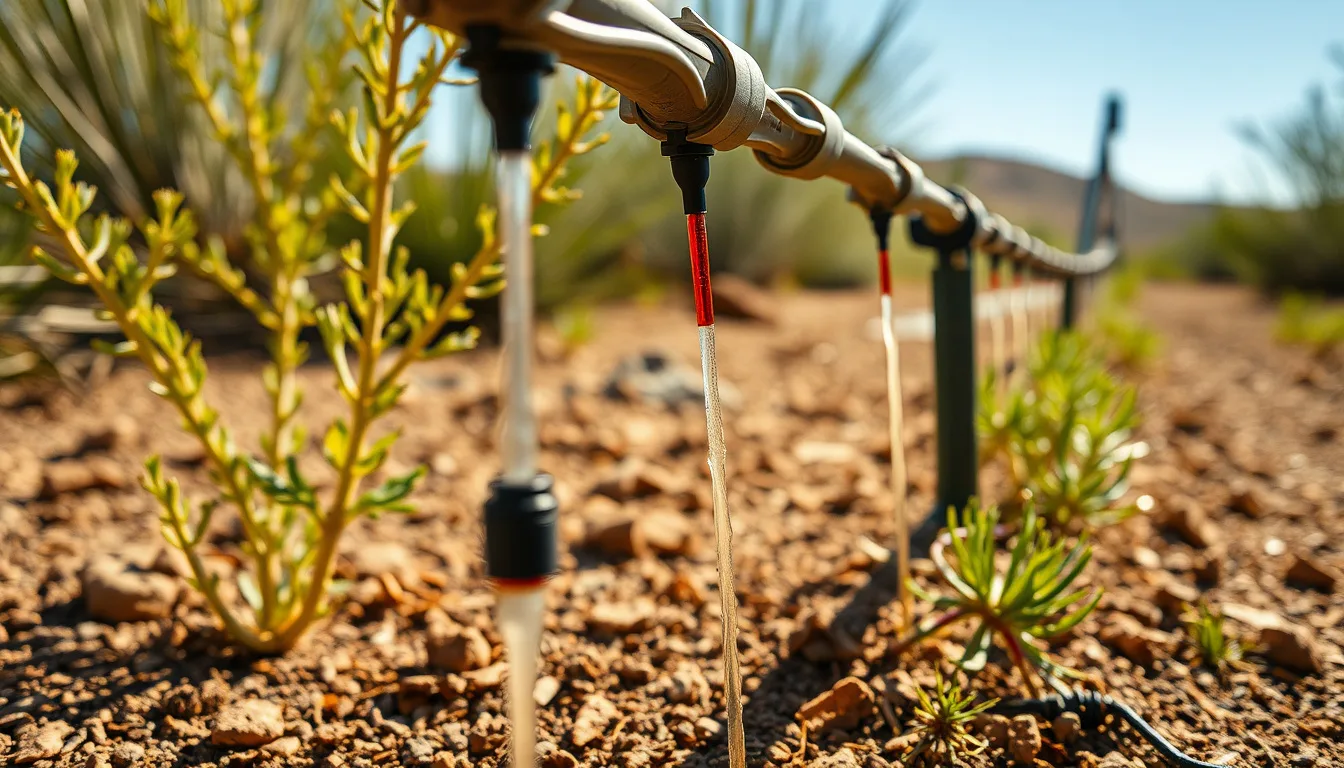
Most irrigation poly tubing and drip line is made from polyethylene, a plastic that's naturally vulnerable to UV degradation over time. In a climate with mild summers and real winters, that degradation happens slowly. In the low desert, where drip tubing can sit exposed to direct sun for months at surface temperatures well above the surrounding air temperature, the same material becomes brittle and prone to cracking far faster — which is why sun-brittle poly line is one of the most common irrigation problems we see in Maricopa-area yards.
Valves and controllers take a similar beating from heat cycling rather than sun exposure directly. Repeated cycles of extreme daytime heat followed by cooler nights stress the seals and internal components of solenoid valves faster than a stable climate would, which shows up as valves that stick open, stick closed, or leak at the seams years before you'd expect a valve to fail in a milder market.
Hard Water and Mineral Buildup: The Slow Emitter Killer
Heat gets the headlines, but mineral-heavy water is just as responsible for irrigation problems across the Maricopa area. Arizona's water commonly carries a higher mineral content than water in many other parts of the country, and over time that mineral content builds up inside the small orifices of drip emitters — the same way hard water leaves scale on a showerhead, just on a component engineered to pass a precise, tiny amount of water at a time.
A clogged emitter doesn't usually announce itself with a leak or a puddle. It shows up as one plant in an otherwise healthy bed slowly declining, or a section of xeriscape planting that never quite establishes the way the rest of the yard did — which is exactly why a routine system check catches emitter problems long before you'd notice them by eye.
Drip vs. Spray: Why Drip Wins in Desert and Xeriscape Design
Traditional spray-head irrigation was built around even, broadcast watering across a wide area of lawn. That approach makes sense for turf. It makes very little sense for a xeriscape bed of individually spaced desert-adapted plants, where a spray head wastes a large share of its output to evaporation and overspray onto rock or hardscape that doesn't need water at all.
Drip irrigation delivers water directly to the root zone of each plant through low-flow emitters, which is why it's the standard for xeriscape and desert-adapted landscaping rather than a lawn-style sprinkler system. The efficiency difference is a big part of why the average xeriscape needs less than 18 inches of irrigation a year, compared to more than 55 inches for a Bermuda lawn with winter overseed — the water a spray system would lose to evaporation and overspray, a drip system delivers straight to the roots that actually need it.
Common Desert Irrigation Problems, Answered
The irrigation issues we see most often in Maricopa-area systems follow a short, predictable list:
- Sun-brittle or cracked poly drip tubing, from prolonged UV and surface-heat exposure
- Clogged drip emitters, from hard/mineral water buildup inside the emitter orifice
- Valve failures, from repeated extreme heat cycling on seals and internal components
- Broken sprinkler heads, from lawn equipment, foot traffic, or ground settling
Most of these failures are gradual, not sudden — which is exactly why a system that "worked fine last year" can show up dead or underperforming the first week of real summer heat if it wasn't checked beforehand.
Warning Signs Your System Is Already Failing
Because desert irrigation problems tend to build slowly, the early signs are easy to write off as something else. A few worth paying attention to before they turn into a bigger repair or a dead section of landscaping:
- One plant declining while its neighbors look fine — often a single clogged or disconnected emitter, not a plant-health problem.
- A soggy or eroded patch near a valve box — usually a valve that's failed to seal shut and is weeping water underground where you can't see it.
- A controller zone that used to run for a set number of minutes now finishing early or late — a sign of a pressure change somewhere in that zone, frequently a cracked line.
- A noticeable jump in the water bill with no obvious cause — a classic symptom of a slow underground leak that never surfaces as a visible puddle.
- Rock or decomposed granite that stays damp long after a watering cycle ends — often overspray or a broken head watering an area it was never zoned to reach.
None of these are emergencies on their own, but any one of them left unaddressed through a full Arizona summer tends to get more expensive to fix, not less — both in water cost and in plants that don't recover once they've gone too long without adequate water.
Who Do You Call — a Plumber or an Irrigation Specialist?
Landscape irrigation specialists are generally the better call for sprinkler and drip-system repair. Some plumbers can handle basic valve work, but irrigation-specific diagnosis — emitter clogs, zone and controller troubleshooting, drip-line design for a xeriscape layout — is a specialized skill set most general plumbers don't focus on day to day. If a system problem is really about water pressure or a main supply line, a plumber is the right call; if it's about how the system is designed, zoned, or distributing water to specific plants, that's irrigation-specialist territory.
How Long Should Your System Actually Last?
A well-installed and properly maintained irrigation system can last 15 to 20-plus years as a whole. Individual components rarely make it that long without attention, though — valves, emitters, and poly tubing exposed to Arizona sun often need replacement well before the system itself is due for an overhaul. Regular checkups are what catch a single failing valve or a run of clogged emitters before they turn into a bigger, more expensive problem or a dead section of landscaping.
New Drip Installation for Xeriscape Conversions
If you're converting turf to xeriscape, the irrigation system almost always needs to change along with the plants — a lawn-style spray system isn't built to water individually spaced desert plants efficiently, and running one anyway defeats a large part of the water-savings case for converting in the first place. A proper xeriscape conversion includes designing a new drip system sized and zoned to the actual plant layout, not retrofitting the old sprinkler heads and calling it done.
This is also where many Maricopa-area HOAs come in: most communities still require some form of working irrigation even in a fully xeriscaped yard, specifically to keep desert-adapted plantings alive — a properly designed drip system satisfies that requirement while using a fraction of the water a lawn sprinkler system would.
Get Your System Checked Before Summer Hits
The best time to find a failing valve or a cracked line is before the first triple-digit week of the year, not during it. A pre-summer irrigation checkup — verifying every zone, checking emitters for clogs, and testing valves and the controller — is one of the highest-value seasonal services a desert homeowner can schedule, because it catches problems while a fix is still a quick repair instead of an emergency call with a dead plant bed to show for it.
Frequently Asked Questions
What are common irrigation problems in the desert? Sun-brittle or cracked poly drip tubing, clogged drip emitters from hard/mineral water buildup, valve failures from extreme heat cycling, and broken sprinkler heads from lawn equipment or settling soil are the most frequent issues we see in Maricopa-area systems.
Who do I call for irrigation issues — a plumber or a landscaper? Landscape irrigation specialists are generally the better call for sprinkler and drip-system repair — while some plumbers can handle basic valve work, irrigation-specific diagnosis is a specialized skill set most general plumbers don't focus on.
What is the life expectancy of an irrigation system? A well-installed and maintained irrigation system can last 15-20+ years, though individual components — valves, emitters, poly tubing exposed to Arizona sun — often need replacement well before the system as a whole. Regular checkups catch component failures before they cause bigger problems.
How much does it cost to fix an irrigation line or system? Cost depends on what's failed — a single valve or emitter repair is a modest fixed-price job, while a full drip-system redesign for a xeriscape conversion is a larger project we quote after inspection.
Should I switch to drip irrigation for my desert landscaping? Yes, in almost every case — drip irrigation delivers water directly to plant roots with far less evaporation loss than spray systems, which is exactly why it's the standard for xeriscape and desert-adapted plantings rather than traditional lawn-style sprinklers.
Get Your System Working Before the Heat Does
A desert irrigation system that's diagnosed correctly the first time saves you the repeat service calls that come from patching the wrong problem. We check every zone, valve, and emitter — not just the one that's obviously leaking — and give you a fixed price for the repair or new drip design your yard actually needs.
Call 844-967-5247 for a free irrigation inspection in Maricopa, AZ and the surrounding West Valley/Pinal County area.
Ready for a free estimate?
On-site estimates for Maricopa and the West Valley — water-wise design, honest pricing.